
A New Digital Foundation for Clover Creek
Clover Creek Ready Mix had a small Squarespace site with useful business facts, a supplied logo, and real photography, but the public experience did not explain the company’s delivery area, project fit, ordering process, or the difference between supplying concrete and placing it. Through Grisb.io, I rebuilt the site as a custom WordPress system centered on those practical questions.
My work covered information architecture, page writing, visual design, front-end development, the block-editor experience, a concrete calculator, protected forms, technical SEO, analytics, Search Console, redirects, and the move from Squarespace hosting to DreamHost. The goal was a local-business site that could answer useful questions without inventing services or burying the phone number.

Turning Real Business Details Into Useful Pages
I started with the information Clover Creek already had: its Mona location, delivery work, project photography, contact details, and the questions people ask before ordering. That became a 16-page public structure covering ready mix, delivery, service area, residential and commercial work, ordering, preparation, and focused project types.
The writing keeps the company on the correct side of an important boundary. Clover Creek supplies and delivers ready mix. It does not claim to design, place, finish, or engineer the work. Keeping that distinction visible made the site more accurate and gave homeowners and contractors a clearer idea of what to prepare before calling.
Designing Around the Work, Not a Template
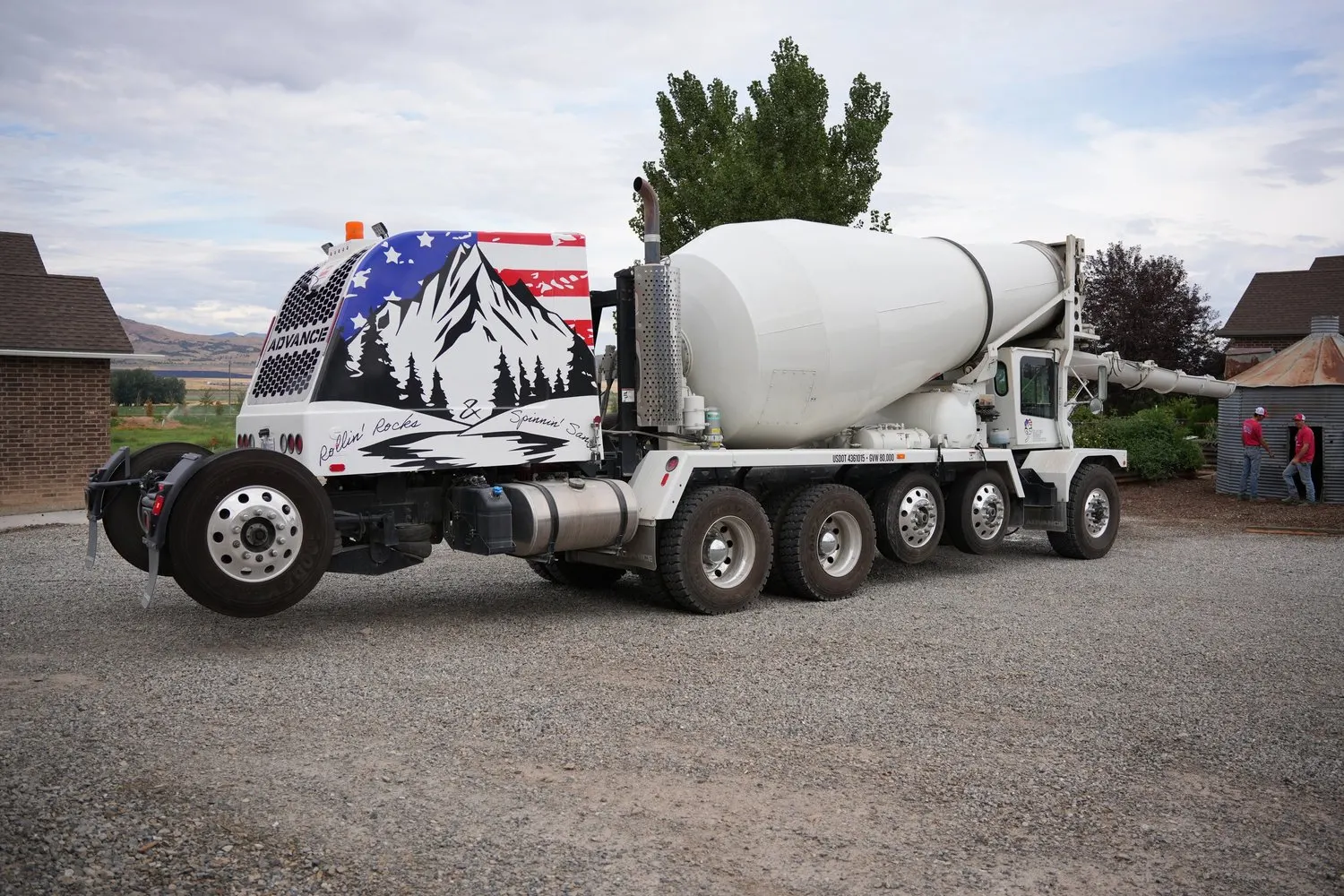
The site uses the supplied Clover Creek identity rather than pretending I designed a new logo. I extended it into a responsive web system with asphalt and concrete neutrals, safety-yellow actions, large readable type, local Utah imagery, and direct calls to contact the team. The result feels specific to trucks, pours, jobsite planning, and central Utah without turning the interface into a construction-theme cliché.
I built the mobile experience as its own layout problem. Navigation becomes a compact drawer, the call action stays easy to reach, and large headings reflow without losing their hierarchy. The site carries the same tone at a narrow width instead of shrinking the desktop design until it technically fits.

A Service Architecture Built Around Intent
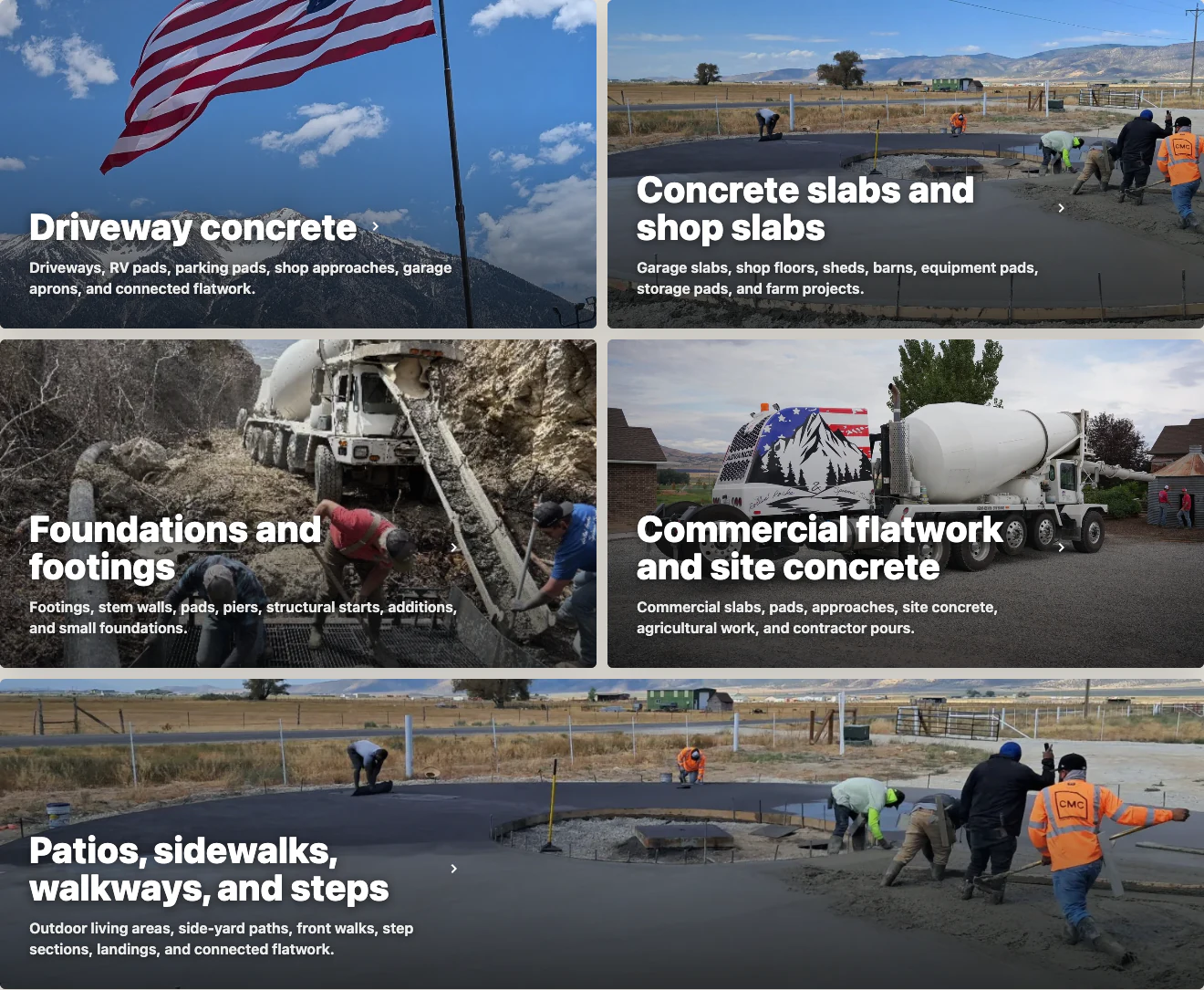
Ready mix, delivery, residential work, commercial work, and project planning each needed a distinct job on the site. The project section groups driveways, slabs and shops, foundations and footings, commercial flatwork, patios, sidewalks, and related work around the decisions a visitor is actually trying to make.
I deliberately stopped short of creating a page for every noun that appeared in the source material. Pads, approaches, barns, and agricultural work stay within stronger parent pages when the search intent and planning advice overlap. That keeps the site useful and avoids a pile of location or service pages that say nearly the same thing.
Making Concrete Ordering Easier
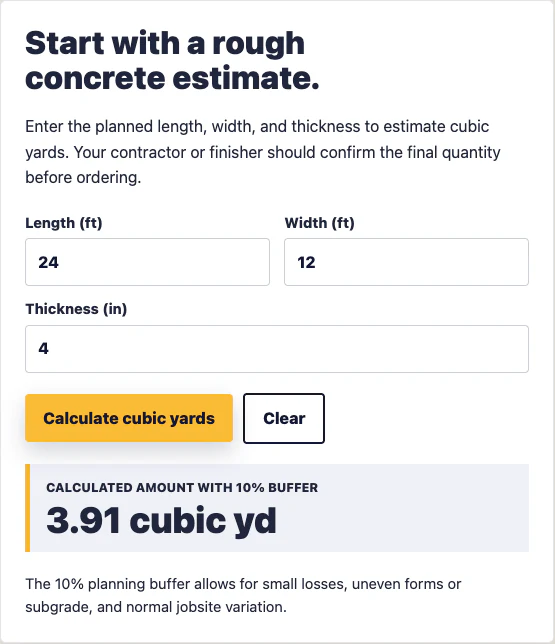
The ordering guide turns a vague request for concrete into a manageable checklist: project address, dimensions or rough quantity, planned thickness, truck access, crew readiness, and preferred timing. A custom calculator converts length, width, and thickness into cubic yards and adds an explained 10 percent planning buffer.
The calculator is intentionally framed as a planning tool, not a substitute for the contractor or finisher confirming the final order. That kind of restraint mattered throughout the project. The site should make the call more productive without giving advice the business did not authorize.
A WordPress System the Client Could Maintain
The public pages are built from native WordPress blocks, reusable patterns, and controlled variations rather than a purchased page-builder template. Content-only locks protect the layout while leaving approved text and media editable. A limited Clover Content Editor role keeps daily page work available without exposing theme management or fragile code controls.
Global business information such as phone, email, addresses, and hours lives in a focused administration screen. Those values feed the header, footer, page content, metadata, and LocalBusiness data, so a phone-number update does not become a scavenger hunt across saved blocks and theme files.
Local SEO Built Into the Launch
Each intended page received its own title, description, canonical URL, internal links, Open Graph data, and structured information. The launch also included LocalBusiness, WebSite, WebPage, breadcrumb, and matching FAQ data, plus a curated sitemap, legacy redirects, Search Console, and a factual llms.txt.
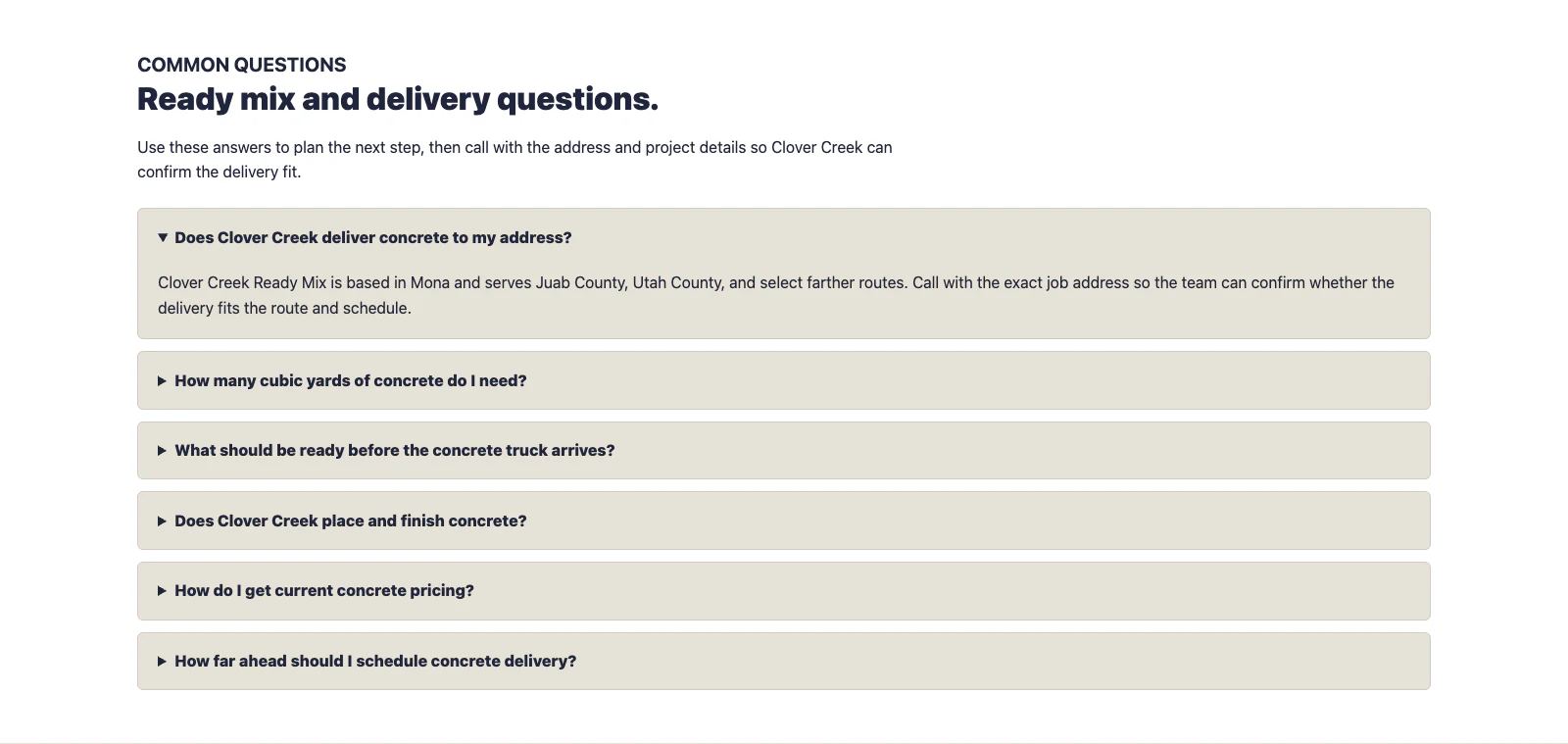
The visible pages do the main work. The FAQ answers delivery, quantity, access, pricing, and scheduling questions in plain language. Structured data mirrors that content rather than adding claims visitors cannot see, and new location pages are reserved for future query evidence instead of being created on speculation.
Protected Forms and Useful Measurement
The contact path uses Grisbio Forms with Cloudflare Turnstile, honeypot and timing checks, rate controls, and layered vendor-spam screening. Review routing is handled without exposing private recipients or security details in the public interface.
GA4 and Search Console were configured alongside privacy-safe events for calls, contact actions, email clicks, calculator use, and lead steps. Those events create a baseline for learning after launch. They are not presented as proof that a short reporting window produced long-term growth.
Moving Hosting Without Moving the Domain
The domain remained registered at Squarespace while the website moved to DreamHost. I handled the production boundary between registration, DNS, hosting, HTTPS, apex and www behavior, cache checks, and exact redirects from the older Squarespace paths.
That work is easy to overlook because a good migration mostly looks uneventful. The important result was that the intended pages returned securely at their final addresses, older routes went where they were supposed to go, and the new site could be measured from its actual production domain.
A Launch Baseline Built for Learning
At the recorded launch check, all 16 intended indexable pages returned HTTPS 200 responses. The sitemap was accepted in Search Console, titles and descriptions were unique, canonicals and structured data were in place, and the checked page set had no broken links or insecure production assets. The homepage WebPage and FAQPage data returned zero errors and zero warnings in the Schema.org validator.
Search Console had started discovering the site by late August, including impressions for concrete supply, ordering, and shop-slab searches. That is an early signal, not a ranking case study. What I can show now is the launch itself: verified business details became a custom site the client could edit, customers could use, and search and analytics tools could understand.