
Quick overview
The pets are on my desk now
I was the art director and an artist on Super Auto Pets at Team Wood Games. Opening Card Battle is my first chance to see a lot of that artwork in a physical game.
Seeing the work after the project ended
By the time I opened this box, I had already finished working on Super Auto Pets. I had spent multiple years looking at these pets, backgrounds, and interface assets, then gone a while without seeing them every day. Getting the board game felt a bit like opening a time capsule.
The first things I noticed were tiny. A background behind a card. A pattern from the settings screen. An asset I had made for a button, now being used to display information on packaging. I recognized the pieces before I had even started going through the decks.
This is a first look at the physical game through the artwork I helped make. I am not coming at it as an independent reviewer, and I am definitely not here to teach competitive strategy. I spent years working on Super Auto Pets and am still bad at Super Auto Pets. That may carry over to the board game.
What is Super Auto Pets Card Battle?
Super Auto Pets Card Battle is Plaid Hat Games’ tabletop adaptation of Team Wood Games’ video game. It is a card game, even though I keep calling it the Super Auto Pets board game while opening it.
The familiar decisions are still there: buy pets and food, decide how they fit together, and put your team in an order that makes their abilities work. In the publisher’s tabletop version, you shop for cards, arrange your team in secret, and reveal pets as the battle resolves. The game lasts six rounds, with trophies deciding the winner.
That gives someone who knows the app a recognizable starting point. It is not a card-for-card copy of the digital rules, though. The official rulebook is the place to go for the actual tabletop timing and abilities.
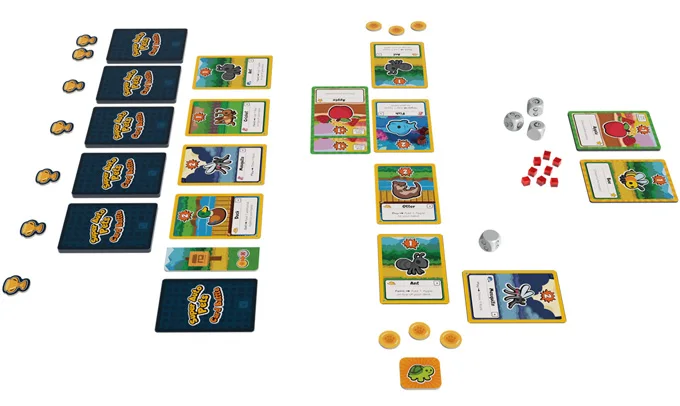
Backgrounds, buttons, and all the familiar little pieces
The pets are the obvious connection, but they were not the only things that made the jump. I kept finding backgrounds and interface artwork we had worked with in the video game, now sitting behind cards or inside the rulebook.
We made day and night versions of the backgrounds. Seeing one version on the front of a box and another on the back was especially fun. Those are scenes I had spent a very long time looking at digitally. Now I could turn the box over in my hands.
I liked seeing which scenes were paired with which pets, too. The duck has the river behind it. The spider gets the dungeon. The hippo and giraffe turn up against the savanna. Some of my favorite parts of opening the decks were just noticing those choices.
My role was on the video-game side, including art direction and making artwork. Plaid Hat’s tabletop team did the work of turning those assets into this particular card game. The finished layout gives familiar art a different place to live.
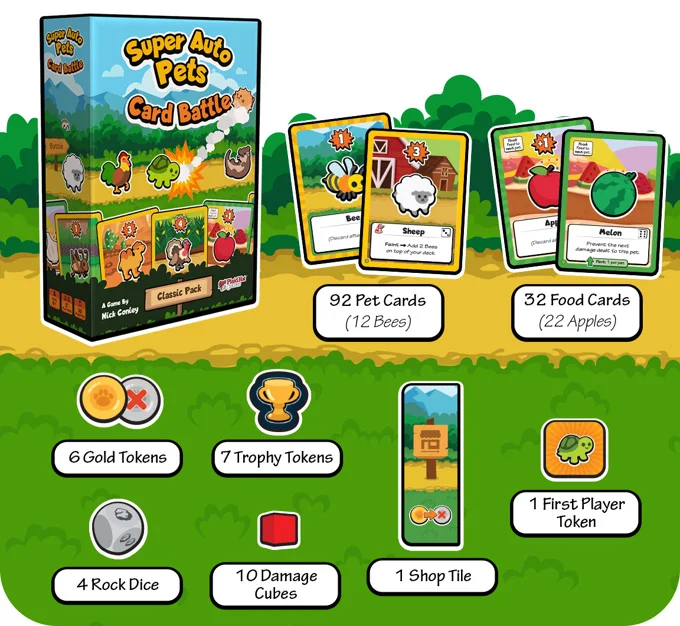
Making the pets look like stickers
The pets were meant to feel like stickers a kid might collect and play with. That gave us some fairly strict limits. We could not keep adding gradients, shading, or tiny anatomical details every time a creature was difficult to draw.
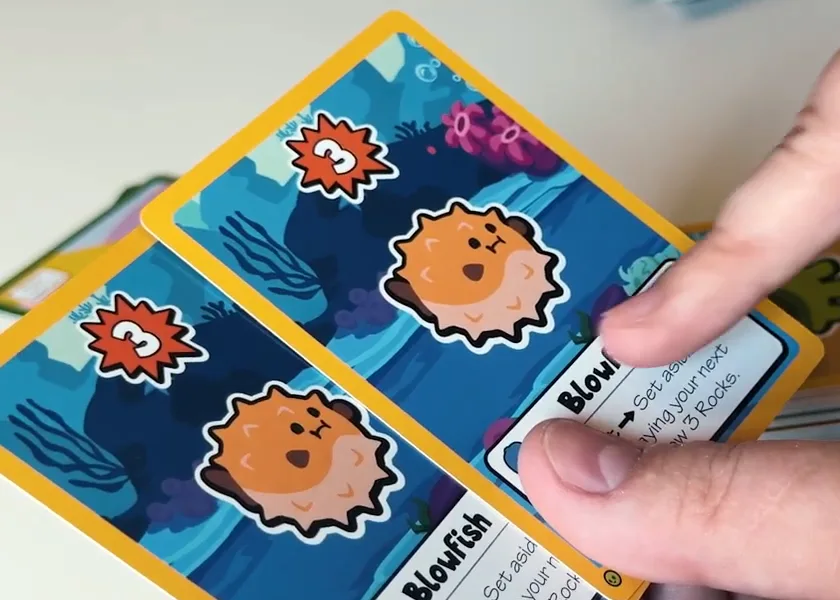
The blowfish is a good example. Spines around the outside can help describe its silhouette, but the body still has to read as round without turning into a shaded illustration. We used changes in color and small, simple marks to suggest those spines while keeping the pet flat.
The shark has another detail that is easy to miss: its teeth are the same color as its skin. I wanted to keep the white and black used in the outline from running directly into that outline inside the pet. Instead of making the teeth white, we let their shape do the work.
There were similar decisions on the gorilla. We could have introduced another gray to describe the arm, but used the existing shadow shapes instead. A small palette meant we had to be more deliberate about where those shapes went.
We also tried to avoid props unless they were doing something important. The squirrel’s acorn is an exception. I cannot remember whether we kept it from the earlier emoji design or used it to distinguish the squirrel from the chipmunk, so I would not pretend that was a perfectly documented grand plan. I do remember that we kept an eye on how many pets were holding things.
Keeping similar animals from becoming the same pet
We had a lot of dogs. Eventually, getting another dog to have a distinct silhouette became a real problem. Frost Wolf went through several iterations because it needed to look different from the dogs we already had.
The same issue came up with creatures like weasels and stoats. Changing the face was not always enough. We had to change the pose so you could tell what you were looking at from the overall shape.
Color helped separate animals that shared similar forms, too. I remember struggling with the nyala’s colors, and that wider need for variety is part of why some pets ended up so bright. The pink giant isopod certainly does not get lost in a lineup.
Researching the animals was one of my favorite parts of the job. There are some ridiculous-looking birds out there. Trying to fit them into this simple art style gave me a reason to learn about creatures I might never have looked up otherwise.
The bulldog was based on Elvis
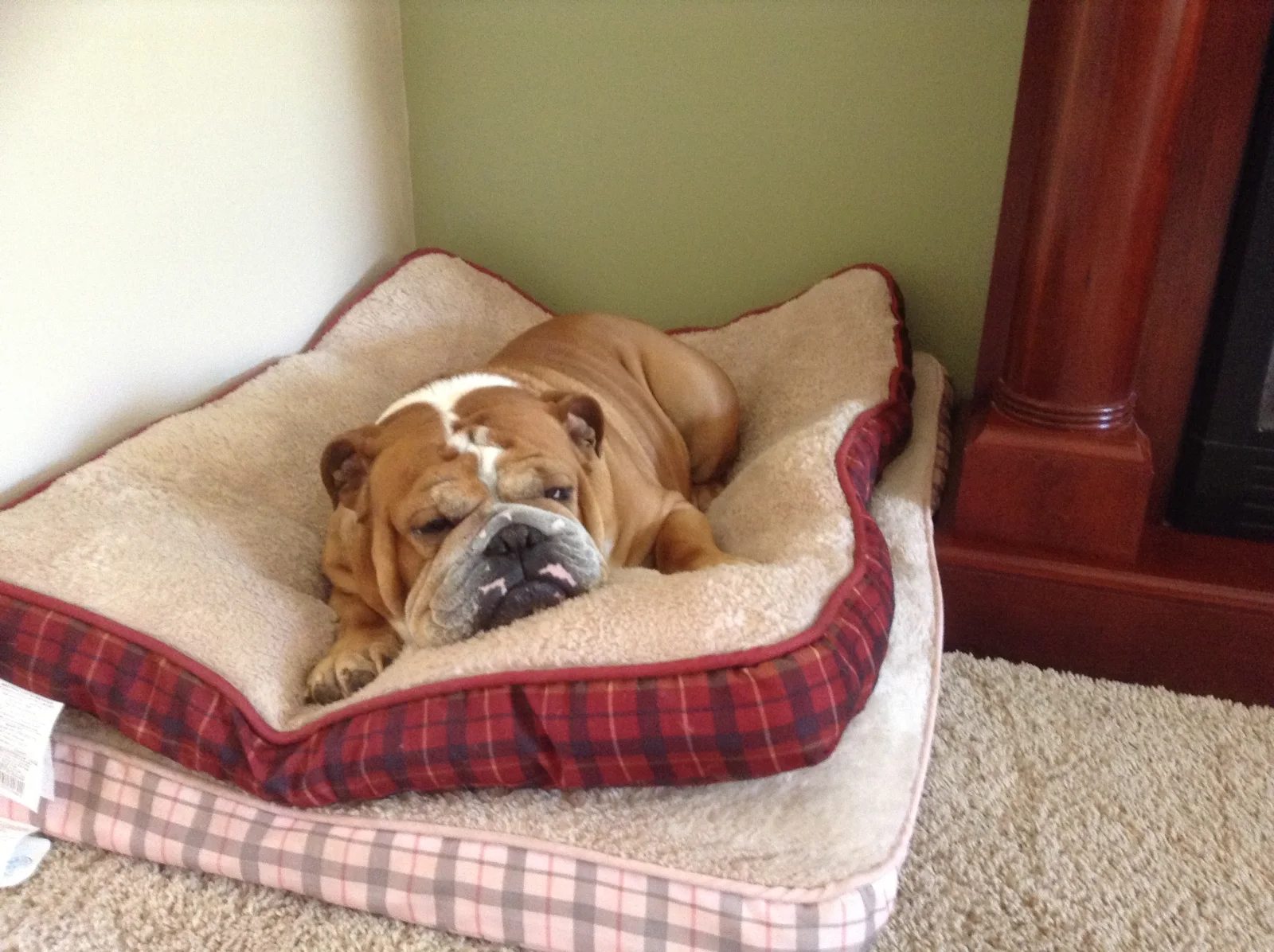
The bulldog is the card with the most personal history for me. My bulldog, Elvis, had recently passed away when I started at Team Wood, and I made the pet to resemble him.
The coloring was intentional, and so was what we used to call his cinnamon-bun tail. Seeing that little version of him in the deck was a different feeling from spotting a background or an icon. I know exactly who I am looking at.
Some very small changes stayed with me
The catfish reminded me of a late change to its face. I added the little patch of belly color at what I remember being about eleven at night. It was a small addition, but the face was much more boring without it.
The tomato had to be cut in half so it did not look like an apple. That is the kind of problem that comes up when a whole collection has to share an art style while remaining readable as individual objects.
And we put a lot of effort into making insects and spiders cute. Some people are really uncomfortable with bugs, and I did not want a pet to be unpleasant to look at just because it happened to have more legs.
Classic, Magic, and Golden, not quite the names I keep saying
In the video I keep slipping into the video-game pack names, especially Turtle and Unicorn. The tabletop boxes are labeled Classic Pack, Magic Pack, and Golden Pack.
The fantasy creatures were a fun change from the earlier work of translating emoji-based pets into our own assets. We called that project the fantasy pack internally for long enough that I still reach for that name. Seeing an original creature like Team Spirit, the two-headed ghost bird, on a printed card brought that part of the project back immediately.
The Magic Pack also gave us more room for things like potions and unusual props. I liked revisiting the backgrounds in those cards, including the nighttime school scene and the moon. Eating the moon while standing on the moon is quite a setup.
My copy includes extra components, including a large play surface and upgraded-looking pieces. Do not use the unboxing as a standard-box contents list. Check the particular edition or pack you are buying.
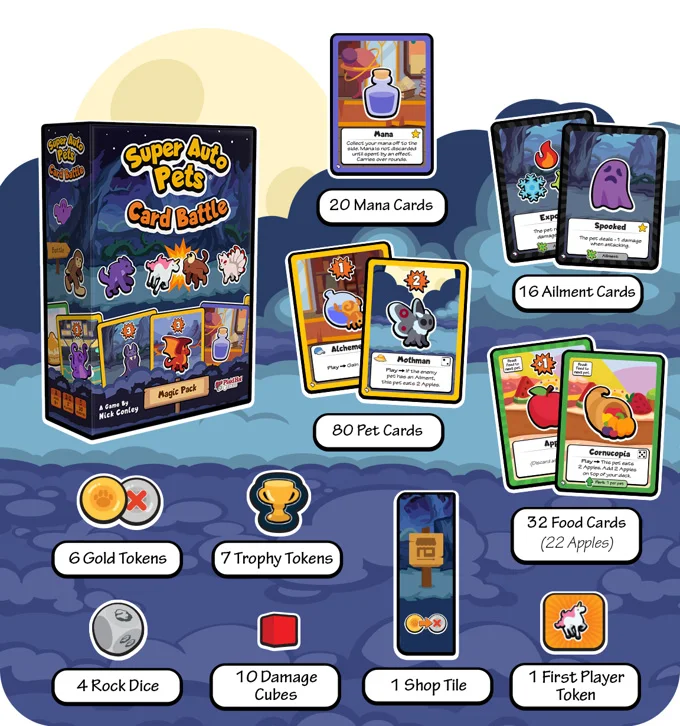
Pack reference
The three standalone Card Battle packs
- Classic Pack
- The publisher’s suggested starting point, with a range of pet and food abilities.
- Magic Pack
- Fantasy pets and mana as an additional resource.
- Golden Pack
- Trumpets as a resource, including a Golden Retriever that can enter battle.
Each of these is a standalone two-player game. They can also be combined. See Plaid Hat’s pack descriptions for the current product details.
The names at the back of the rulebook
Near the end of the video, I go looking for my name in the credits. There it is, alongside Ellie Babin and Sofia Beatriz Dias de Oliveira under Illustrators.
Nick Conley is credited as the tabletop game designer, and Kendall Elmen as graphic designer. The game is based on Super Auto Pets by Andreas Kuni and Matthias Lau Magnussen. It is good to see those roles written out, because the physical game involved more than the art I recognize while opening it.
Thank you to the artists who worked with me, to Andreas and Matthias, and to everyone at Team Wood. Being the art director for Super Auto Pets was a fantastic part of my life. Finding these drawings in a box on my desk was a lovely way to revisit it.
If you want to see the interface side of that work, my Super Auto Pets UI/UX project goes into the game screens and visual system.
Super Auto Pets board game questions
01Is there an official Super Auto Pets board game?
Yes. Super Auto Pets Card Battle is the tabletop card game published by Plaid Hat Games, based on Team Wood Games’ video game.
02Do I need all three packs to play?
No. Classic, Magic, and Golden are each standalone games. Combining packs adds variety and allows more players. Smaller bonus packs can have different requirements, so check the product description.
03How many people can play Card Battle?
One standalone pack supports two players. Plaid Hat describes combining packs for four- or six-player games.
04Who made the artwork?
The rulebook credits Sofia Beatriz Dias de Oliveira, Ellie Babin, and me, Ben Lords, as illustrators. I was also the art director for the video game during my time at Team Wood Games.